The latest research, remarkable discoveries and stories from the archive. Alexander’s world, still coming into focus.
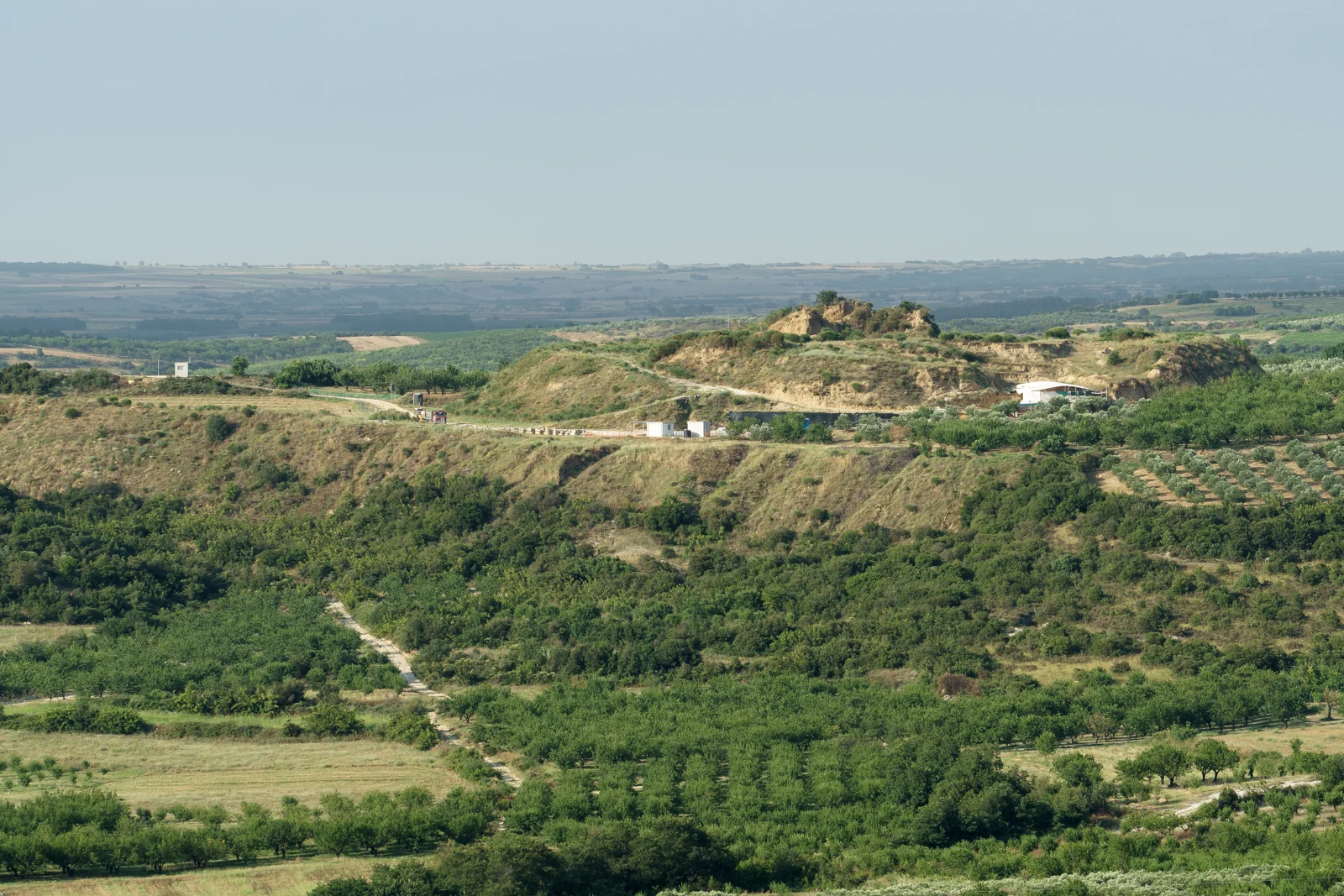
32 reports · newest first · expanded 25 September 2026Kasta tumulus seen from Amphipolis, July 2019. Neptuul · Wikimedia Commons · CC BY-SA 4.0
CONSERVATION · AMPHIPOLIS
Kasta’s monumental tomb comes back into view
Restoration at the fourth-century BCE Kasta monument has revealed more of its interior following the removal of older supports. Further work is planned on its marble doors and sphinx. The monument belongs to Alexander’s era; the identity of its occupants remains unresolved.
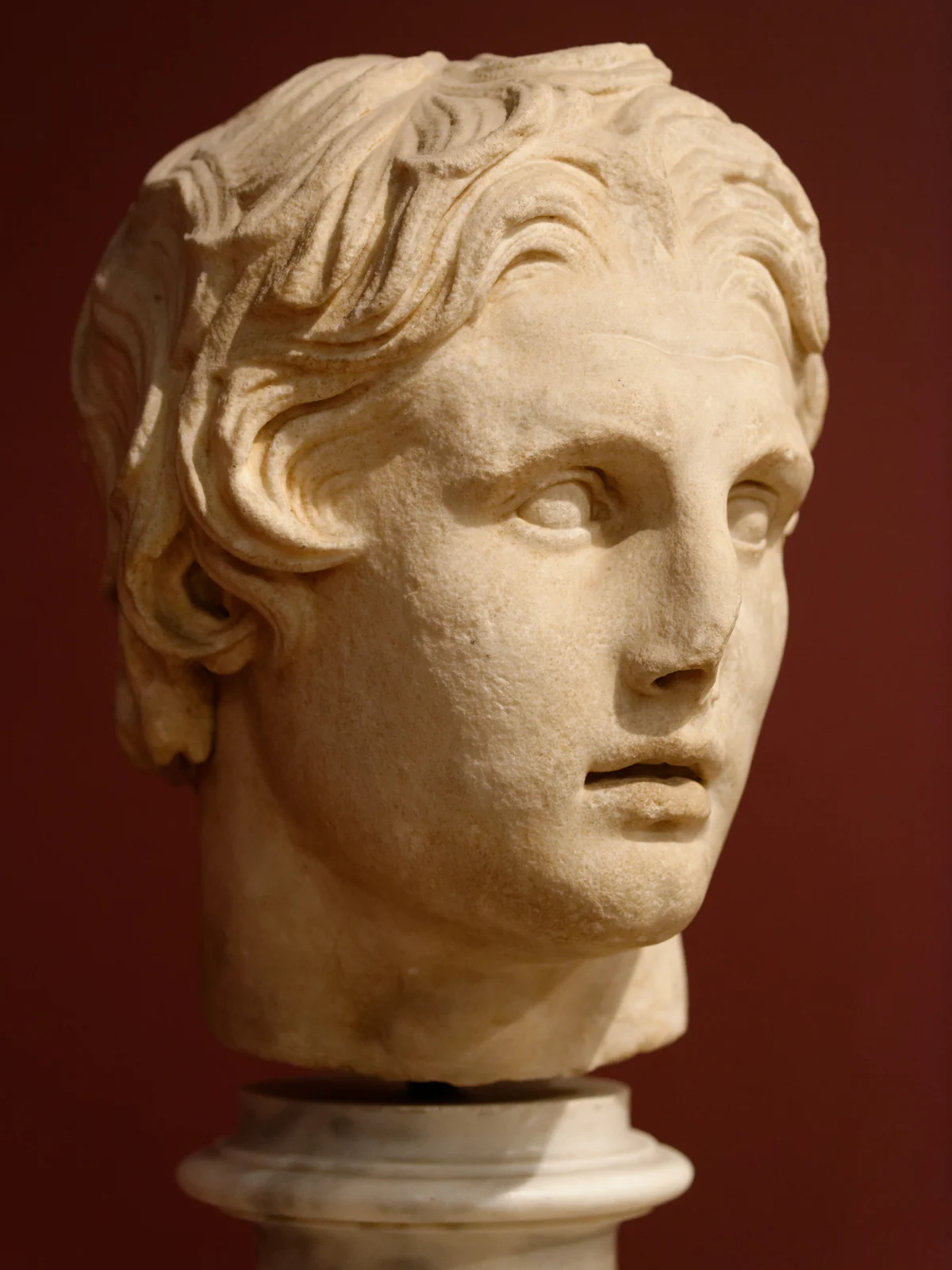
A marble head depicting Alexander as Helios has returned to Italy among a group of more than 300 antiquities. Excavated in the Roman Forum, the first-century CE portrait later disappeared from a museum collection and surfaced in New York. Its return concerns the history and ownership of a Roman image of Alexander, not a new discovery from his lifetime.
Researchers report that planned geophysical work at Alexandria on the Tigris has been postponed amid regional conflict and travel restrictions. The city later known as Charax was founded to connect maritime and inland trade.
The interruption concerns access for fieldwork. It does not undo the earlier surveys, which have already revealed streets, buildings and the outline of a major ancient trading centre.
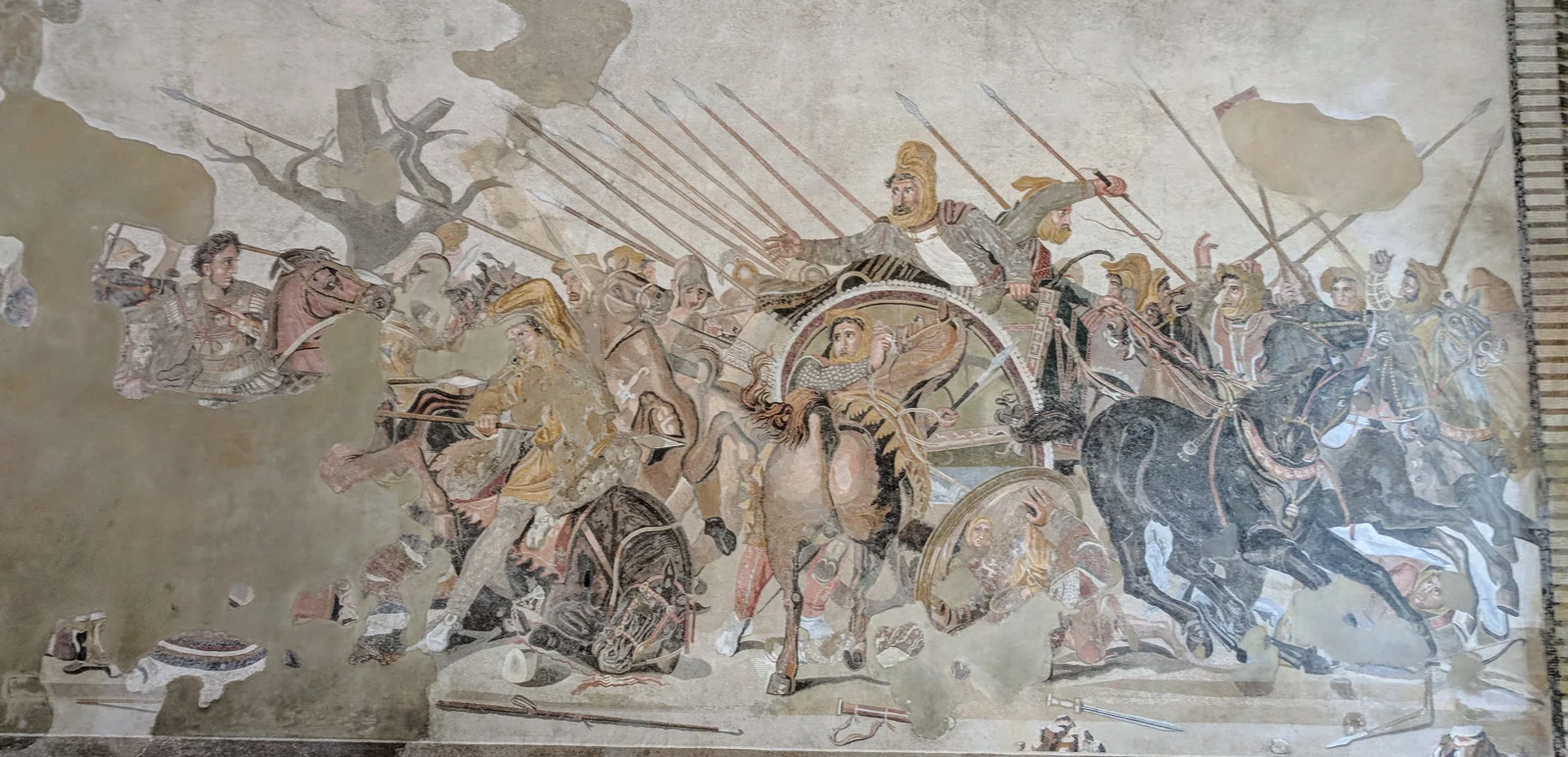
The Alexander Mosaic reaches a new restoration milestone
Consolidation and cleaning of the famous mosaic of Alexander and Darius have been completed, according to a report from Naples. A new display is being planned for the work, originally a floor mosaic in Pompeii.
Completion of conservation work does not itself establish a reopening date. The mosaic is a later Roman image of Alexander, not an object made during his lifetime.
Survey work at Charax Spasinou, a city with roots in Alexander’s foundation on the Tigris, is bringing buried streets, large buildings and working districts into focus. The news concerns the scale and layout of a known archaeological site, rather than the first discovery of its location.
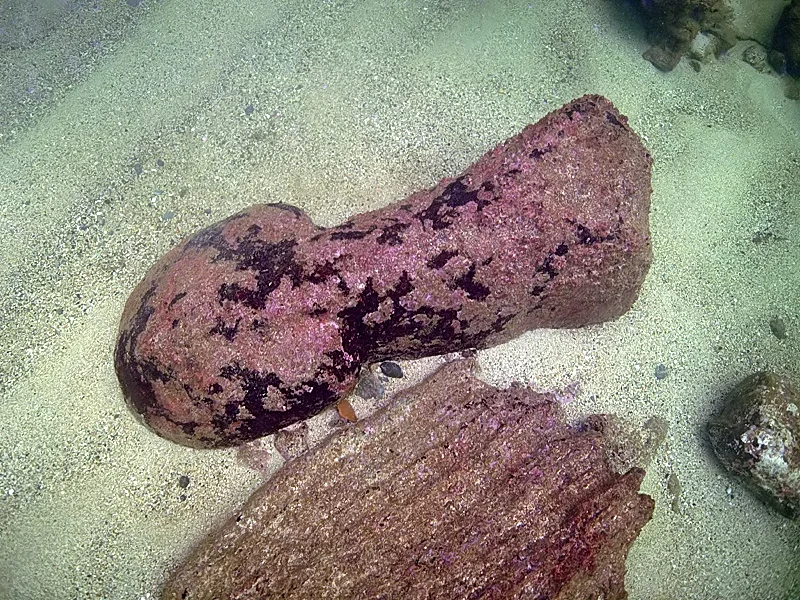
Context: underwater archaeology at Alexandria’s lighthouse site; not the newly identified boat. Roland Unger · Wikimedia Commons · CC BY-SA 3.0
UNDERWATER ARCHAEOLOGY · ALEXANDRIA
A pleasure boat beneath Alexandria’s harbour
Underwater archaeologists have identified the timbers of an unusually large pleasure vessel near Antirhodos. The approximately 35-metre boat dates to the first century CE, long after Alexander. Its remains offer evidence for the maritime life of the city he founded, and for a vessel type previously known mainly through texts and images.
A gold portrait from the world of Alexander’s successors
A rare coin depicting Berenice II has been excavated in Jerusalem. Minted under the Ptolemaic dynasty, it illuminates the reach of the kingdom founded by Alexander’s general Ptolemy I. This is evidence of the world after Alexander, not an object attributed to him personally.
Renewed work at Mieza examines a monumental gymnasium associated with the education of Macedonian elites. Mid-fourth-century BCE dating and finds including writing styluses strengthen its educational context. The site is connected with Aristotle’s teaching of Alexander, but an individual stylus cannot be assigned to a named pupil.
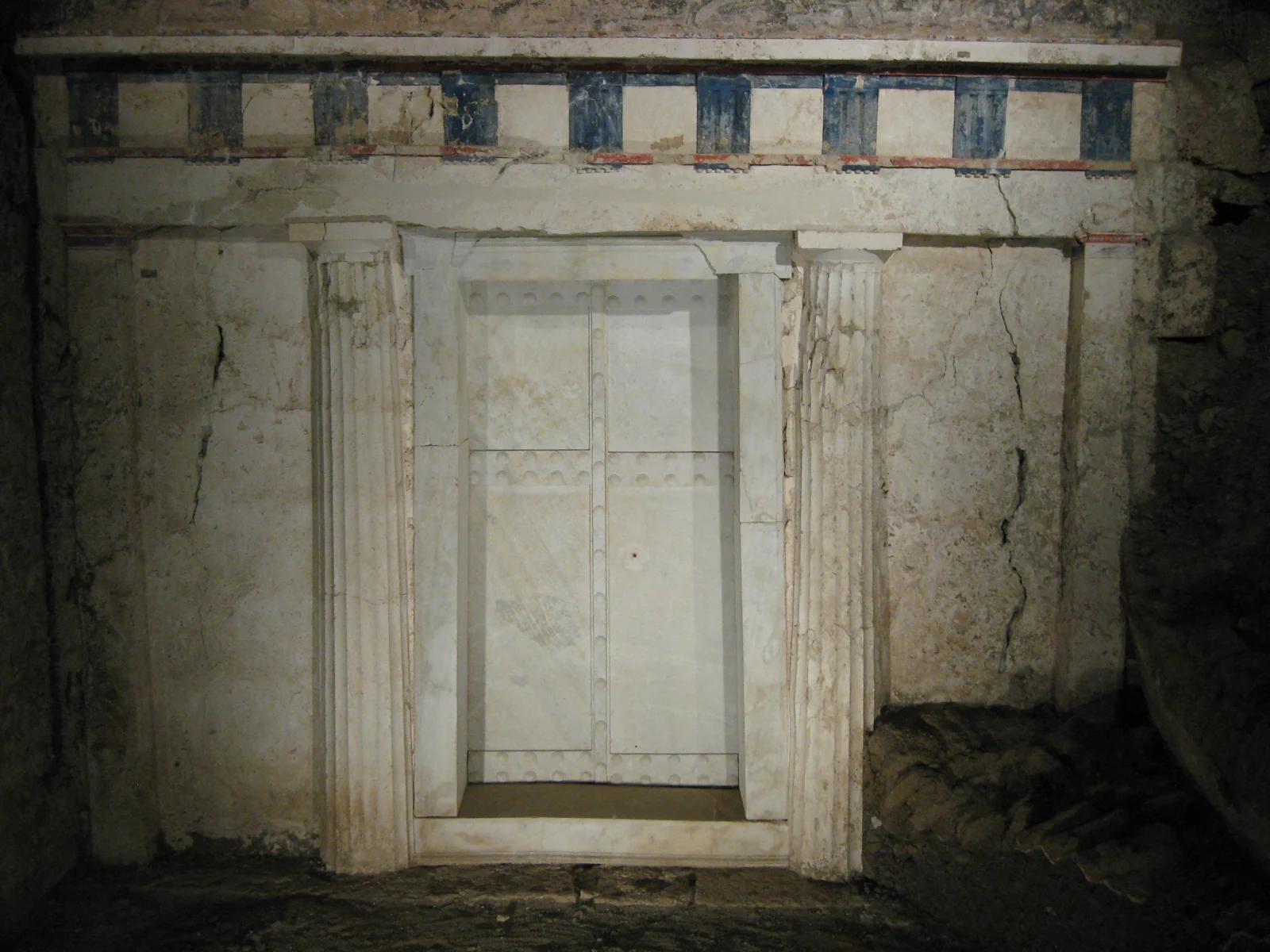
Context: facade of Tomb II at Vergina, not Tomb I discussed in this study. Explorer1940 · Wikimedia Commons · CC BY-SA 4.0
PEER-REVIEWED RESEARCH · VERGINA
New evidence reopens the question of Tomb I
A study combining ancient DNA, bone analysis and dating reassesses the remains in the Tomb of Persephone at Vergina. It identifies a male aged about 25–35 and places the burial in the first half of the fourth century BCE.
Those results challenge familiar identifications of the occupants. The royal cemetery is central to the history of Alexander’s family, but identifying an individual requires more than the prestige of the burial place. Publication: July 2025 issue.
Sphinx underwater near the site of the ancient Alexandria lighthouse; photo September 2010. Roland Unger · Wikimedia Commons · CC BY-SA 3.0
UNDERWATER ARCHAEOLOGY · ALEXANDRIA
Twenty-two blocks of the Pharos return to the surface
The PHAROS team raises major architectural blocks from the seabed, including elements of the lighthouse’s monumental entrance. The CNRS announcement describes a programme of recording, analysis and digital reconstruction.
The lighthouse belongs to the Ptolemaic city that developed after Alexander’s death. Studying the surviving stones helps test its architecture without pretending that a digital model is an intact ancient building.
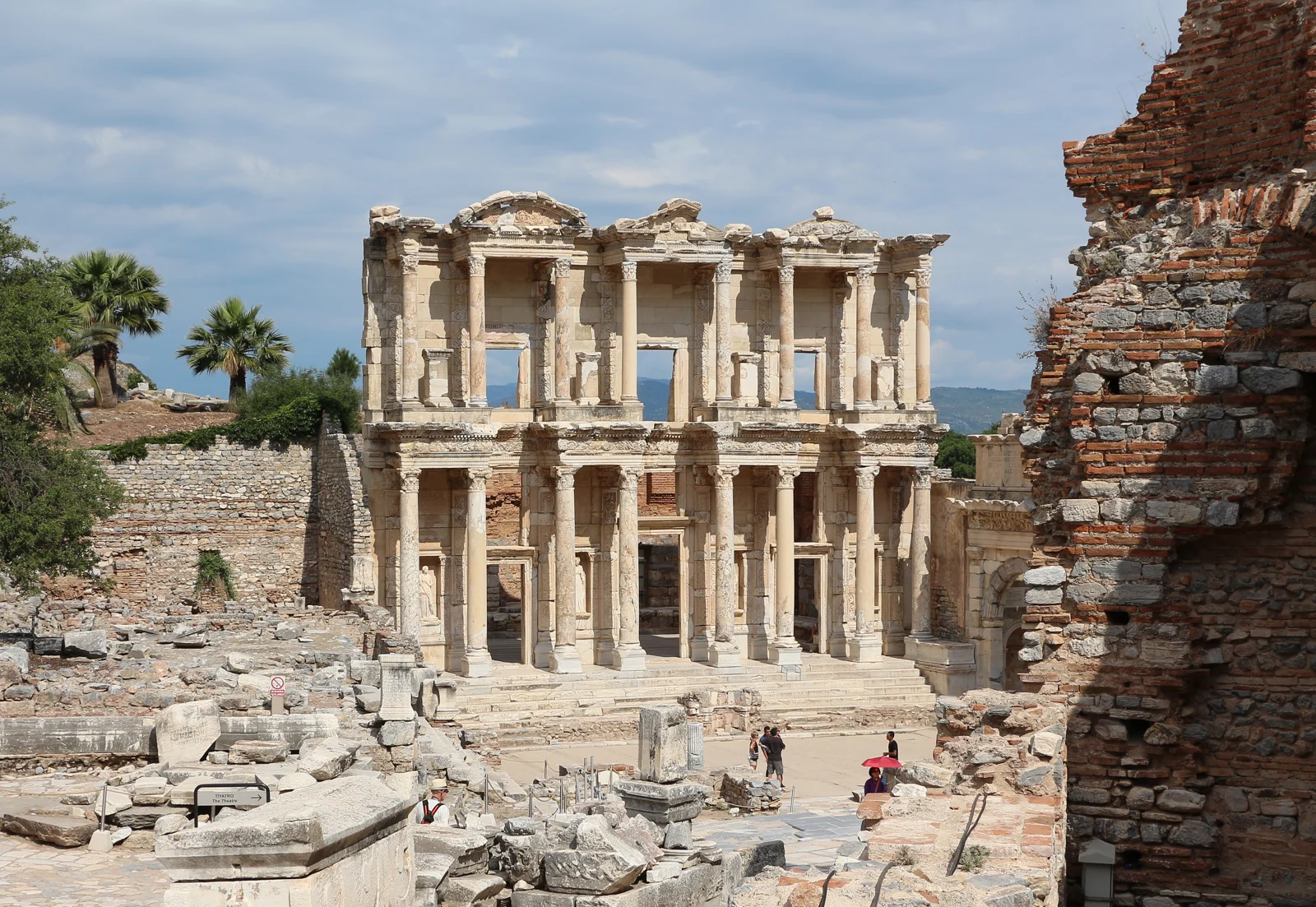
Library of Celsus, Ephesus. Context photograph; this Roman monument postdates Alexander. Bernard Gagnon · Wikimedia Commons · CC BY-SA 3.0
RESEARCH ANNIVERSARY · EPHESUS
A century and more of research at Ephesus
The Austrian Archaeological Institute marks 130 years of excavation at Ephesus, a city on Alexander’s campaign route. Its programme brings together field archaeology, conservation and public presentations of ongoing work.
This is a research update, not the discovery of a new Alexander battlefield. It offers a broader view of how a city’s changing streets, monuments and institutions can be reconstructed across many centuries.
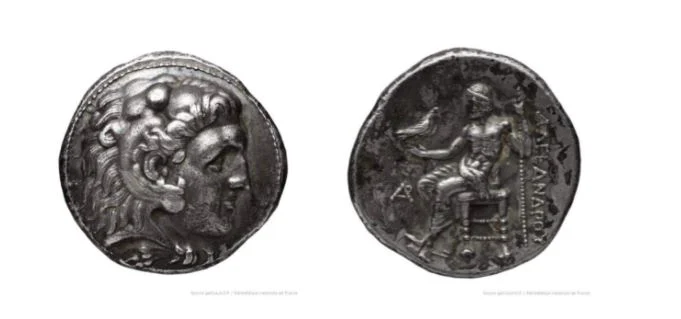
Context: an Alexander tetradrachm from Byblos, not the coin excavated at Gradishte. Anne-Constance Legros · Wikimedia Commons · CC BY-SA 4.0
PROPOSED IDENTIFICATION · NORTH MACEDONIA
A Macedonian city emerges at Gradishte
Excavations and aerial surveys near Crnobuki reveal a substantial settlement, including an acropolis and evidence of craft production. A coin minted during Alexander’s lifetime helps reconsider its chronology. Researchers suggest it could be Lyncus, possibly associated with his grandmother Eurydice I; that identification remains a hypothesis.
Italy’s museum directorate announces a documentary devoted to the restoration of the Alexander and Darius mosaic. It follows the specialists working on one of the best-known surviving images of the Macedonian king.
The report offers a view of conservation as an investigation: supporting a fragile object and understanding its materials are part of preserving the image that visitors recognise.
A headless marble statue of a woman was recovered after being found beside a rubbish bin near Thessaloniki. Its initial assessment places it in the Hellenistic period. The discovery concerns the artistic world that followed Alexander’s conquests; it is not a portrait of Alexander.
Non-invasive analysis examines the stones, colours and conservation materials of the Alexander Mosaic. Researchers distinguish ten tessera colours and propose geological origins for the materials.
Microscopy, imaging and spectroscopy inform restoration decisions. The study concerns how the mosaic was made and preserved; it does not settle every question about the historical battle represented.
Researchers refine the search for the Granicus battlefield
A Turkish research team led by Reyhan Körpe announces a proposed location for the battlefield and Alexander’s approach route near the Biga plain. Landscape research and historical geography underpin the identification.
The announcement is a valuable lead, not a measured plan of every ancient formation. It should be read alongside the evidence and future publications rather than used to make tactical reconstructions appear exact.
Facade of Tomb II at Vergina, traditionally attributed to Philip II; photo May 2009. Explorer1940 · Wikimedia Commons · CC BY-SA 4.0
DISPUTED ATTRIBUTION · VERGINA
Did a surviving textile belong to Alexander?
A proposed identification links textile remains from Tomb II at Vergina to a garment worn by Alexander. Other specialists question both the reconstruction of the garment and its attribution.
The claim is presented here as a debate. Neither the colour of a textile nor its presence in a royal tomb is enough on its own to identify its wearer.
Persian gold sheds light on the economy of warfare
A hoard of gold darics found at Notion offers unusually well-documented evidence for Persian money and possible mercenary pay. The coins predate Alexander’s campaign. Their archaeological context may help researchers refine the chronology of Achaemenid coinage, giving a clearer picture of the empire he later confronted.
A Cornell-led study uses cargo almonds, cleaned wood samples and revised radiocarbon calibration to narrow the Kyrenia ship’s sinking date. The strongest probability falls between 286 and 272 BCE. This places the merchant vessel in the world of Alexander’s successors and improves the chronology of an important source for ancient shipbuilding.
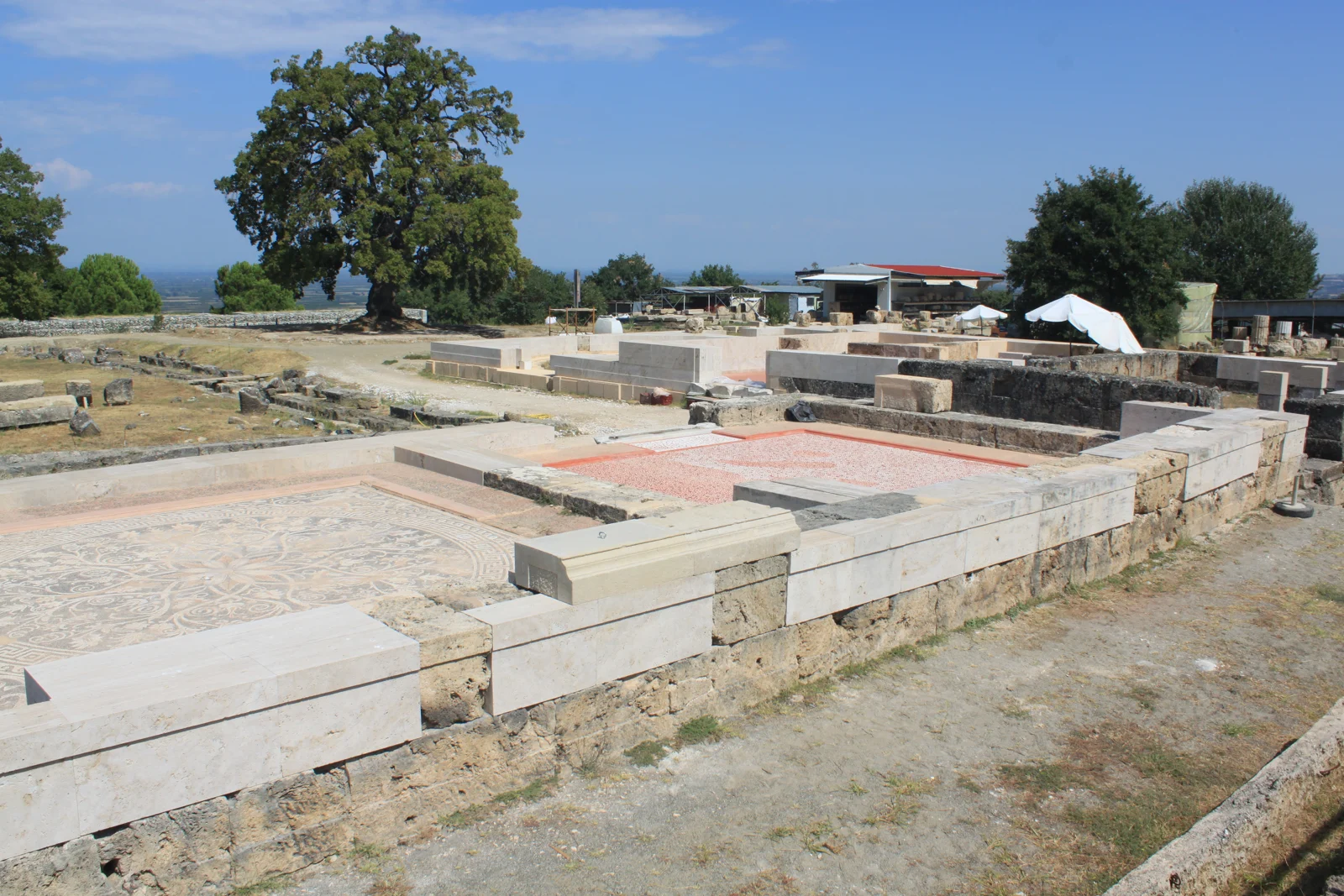
Context: the palace at Aigai, one of the Macedonian royal landscapes discussed in the feature. Iolchos07 · Wikimedia Commons · CC BY-SA 4.0
RESEARCH FEATURE · MACEDONIA
Excavating the world Alexander grew up in
A fieldwork feature follows research at Pella and the royal landscapes of northern Greece. The Pella Urban Dynamics Project uses surveys and excavation to investigate the city’s earlier history and its regional connections. Distinguishing Classical-period Pella from its later Hellenistic expansion helps reconstruct the environment of Alexander’s childhood. Date: May/June 2024 issue.
A bronze fitting found near Ringsted bears a portrait identified as Alexander, centuries after his death. Museum Vestsjælland discusses the find in the context of his later reputation and Roman-period objects in Denmark.
This is evidence of the circulation of Alexander’s image, not evidence that he or his army reached Scandinavia. The distinction is essential to understanding the discovery.
Back inside the palace where Alexander became king
Following a sixteen-year restoration, the palace at Aigai reopened to visitors. Built for Philip II, the complex is associated with Alexander’s proclamation as king in 336 BCE, making its restoration a new opportunity to encounter the architecture of Macedonian royal power.
A marble head found in the Roman theatre at Konuralp has been identified as Alexander through its distinctive hair and facial features. Thought to date to the second century CE, it illustrates his lasting prestige hundreds of years after his death. The find records his later image, rather than a visit by his army to this theatre.
A returned bronze raises questions of authenticity
A bronze portrait returned to Greece prompted renewed debate about whether it is ancient or a modern imitation. Deutsche Welle reports the objections raised by archaeologist Stephan Lehmann and the difficulties surrounding its provenance. Repatriation and authentication are different questions; the object’s ancient status should not be treated as settled.
Excavations at Barikot revealed a Buddhist temple dating at least as early as the late second century BCE. Its architecture, sculptures and inscriptions illuminate religious life in a region shaped by successive Persian, Macedonian, Mauryan and Indo-Greek powers. The temple postdates Alexander and is evidence of Gandhara’s later history. Date: January/February 2023 issue.
Context: an Alexander tetradrachm; this is not identified here as an exhibition loan. Anne-Constance Legros · Wikimedia Commons · CC BY-SA 4.0
EXHIBITION ARCHIVE · LONDON
How Alexander became a worldwide legend
The British Library’s exhibition The Making of a Myth brought together around 140 objects from 25 countries. Manuscripts, coins and modern media traced the transformation of Alexander across languages and cultures. The exhibition explored his changing reputation rather than presenting the later legends as historical events. Opening date shown; the exhibition ended on 19 February 2023.
Context: an Alexander tetradrachm from Byblos, not the drachma recovered in Croatia. Anne-Constance Legros · Wikimedia Commons · CC BY-SA 4.0
COIN DISCOVERY · CROATIA
A silver drachma on a mountain route
Hikers found a late-fourth-century BCE Greek silver coin on Papuk Mountain after heavy rain. Reported as probably minted at Kolophon, it adds evidence for the circulation of Greek money in the region. A transported coin does not establish that Alexander or his army reached the place where it was found.
The sanctuary behind a Macedonian royal connection
Research at the Sanctuary of the Great Gods investigates its buildings, inscriptions and ritual landscape. A feature examines the sanctuary’s links with Philip II and Olympias and its later patronage by Hellenistic rulers. Proposed patrons of particular buildings remain interpretations, distinct from the surviving architectural evidence. Date: September/October 2021 issue.
Analysis of a jar from the Athenian Agora examines inscriptions naming more than 55 people and the remains of a young chicken. The object offers a glimpse of ritual conflict around the era following Alexander’s death. A connection with a lawsuit or political tensions is an interpretation, not a securely identified episode of his campaigns.
A terracotta mask of Dionysus found at Daskyleion is attributed to the late fourth century BCE. The discovery adds to the evidence for religious life in a city shaped by Phrygian, Lydian, Persian and Greek influences. Researchers interpret it as a possible votive offering; it is not a personal possession of Alexander. Date: January/February 2021 issue.
Drones reveal a fortified settlement at Qalatga Darband
Satellite imagery and drone surveys helped investigators trace buried architecture at a strategic pass between Mesopotamia and Iran. Excavation revealed buildings, presses and classical-style sculpture. Despite headlines linking it directly to Alexander, evidence discussed in this report includes later Parthian occupation; the survey does not prove that he founded the settlement.
Context: the Kasta mound at Amphipolis, not a detail of the interior mosaic. Neptuul · Wikimedia Commons · CC BY-SA 4.0
DISCOVERY ARCHIVE · AMPHIPOLIS
Persephone emerges in the Kasta tomb mosaic
Further clearing of the pebble mosaic at Kasta revealed Persephone alongside Hades and Hermes, making the mythological scene clearer. The find became a major part of the investigation of this monumental Macedonian tomb. Its rich decoration does not, by itself, establish who was buried there or identify the monument as Alexander’s tomb.
A curated reading list, not an automatic live feed. Dates refer to publication, a journal issue or an explicitly labelled exhibition opening. Older reports are retained as an archive. Context photographs are labelled and credited; they do not necessarily show the object discussed. Proposed identifications and later Hellenistic or Roman material are distinguished from evidence of Alexander’s own lifetime.